
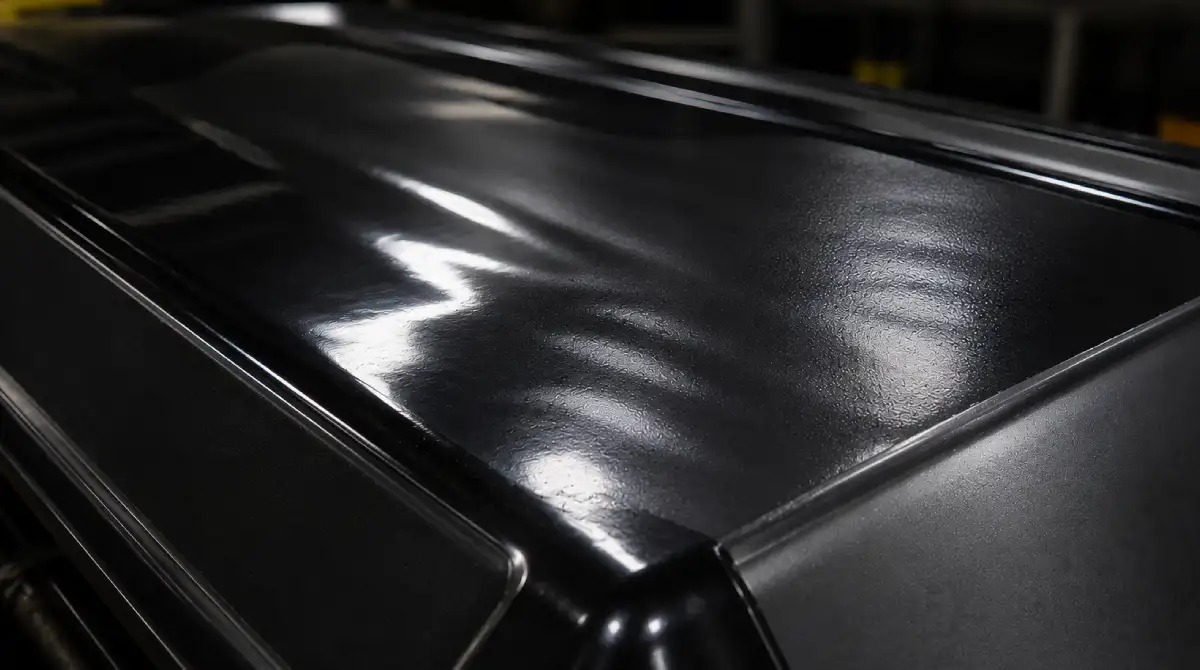
Surface Gloss Change
Surface gloss change occurs when the plastic sheet is overheated and becomes excessively fluid before forming. In this condition, the material may prematurely replicate minor mold imperfections, react to air movement inside the forming area, or flow unevenly across the tool surface.
The result is inconsistent surface appearance, including gloss variation, matte and shiny patches, and subtle undulations that distort reflected light. While the part geometry may remain acceptable, the visual quality can be significantly reduced.
- Reduce heating time to prevent the sheet from becoming excessively fluid.
- Form the material at the recommended tempering temperature rather than operating near the upper processing limit.
- Verify actual sheet temperature using an infrared (IR) sensor.
- Minimize air currents around the heated sheet before forming.
- Inspect mold surfaces regularly to ensure minor imperfections are not being transferred to the part.
THERMOFORA Vacuum Forming Machines
Industrial vacuum forming machines — manufactured and ready to ship
From compact prototyping formats to full industrial sheet sizes. Every machine is built, tested, and shipped from our facility. Running in production across 24 countries.