
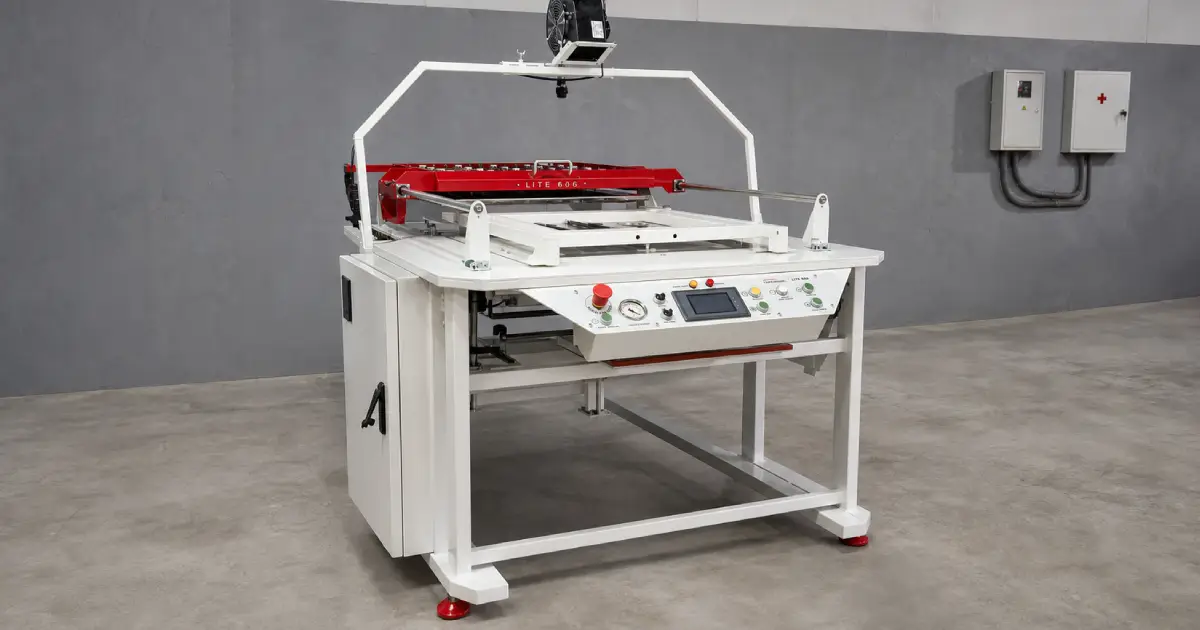
A vacuum forming machine for hobby and professional use has to earn its place in a limited space — but limited space does not mean limited capability. A compact thermoforming machine should deliver everything an industrial unit does: uniform zoned heating, deep and fast vacuum, a sealed clamp frame, and PID temperature control. The only difference is scale. This guide covers what actually matters when choosing a vacuum forming machine for hobby or professional use, and presents two machines from THERMOFORA built to that standard. The SMARTFORM 450 is a bench-top unit on single-phase 230 V, suited to home workshops, prototyping studios, and small professional shops. The LITE 686 is a floor-standing machine with a larger forming area and 17 kW output for hobbyists and professionals who need production-level throughput in a compact footprint.
What a Vacuum Forming Machine for Hobby and Professional Use Actually Needs to Do
The word "hobby" is misleading when it comes to vacuum forming. A hobbyist making cosplay armor, architectural models, custom packaging, or RC car bodies is doing the same process as a small professional shop: heating a thermoplastic sheet to its forming window, draping it over a mold, and pulling it tight with vacuum. The difference between a serious hobbyist and a small professional operation is volume and consistency requirements, not the underlying technical process.
What changes at this scale — whether hobby or small professional — is the context. You are working in a garage, a spare room, or a compact workshop, not a factory floor. You may not have a three-phase power supply, depending on the machine. You probably do not want a 200 kg industrial line. And for home-based makers, you need the unit to be quiet enough to run in the evening without complaints from anyone in the building. Professional users in a dedicated workshop space have more flexibility, but the same core machine requirements apply.
But the core technical requirements stay the same as any professional setup:
- Vacuum depth of at least 24 inHg to pull crisp detail from molds, especially on textured surfaces and tight corners.
- Zoned or controllable heating so thick sheet edges reach forming temperature at the same time as the center, not before or after.
- A forming bed large enough for the parts you actually want to make. A 300 x 300 mm bed sounds reasonable until you realize a standard motorcycle helmet mold is 320 mm wide.
- Sheet thickness range of at least 0.5 to 4 mm to cover both thin packaging work and structural panels in 3 mm ABS.
- A clamp frame that seals reliably — vacuum leaks at the perimeter are the number one reason hobby setups produce soft, incomplete pulls.
DIY shop-vac setups fail on vacuum depth and heating uniformity. They are fine for very shallow pulls in thin film under 1.5 mm. For anything that requires detail reproduction, consistent wall thickness, or sheets above 2 mm — hobby or professional — you need a machine with a dedicated vacuum pump and a proper heating system. The machines below are built to those standards while still fitting a hobby workspace or a small professional shop floor.
SMARTFORM 450: Compact Machine for Full-Size Hobby and Professional Parts
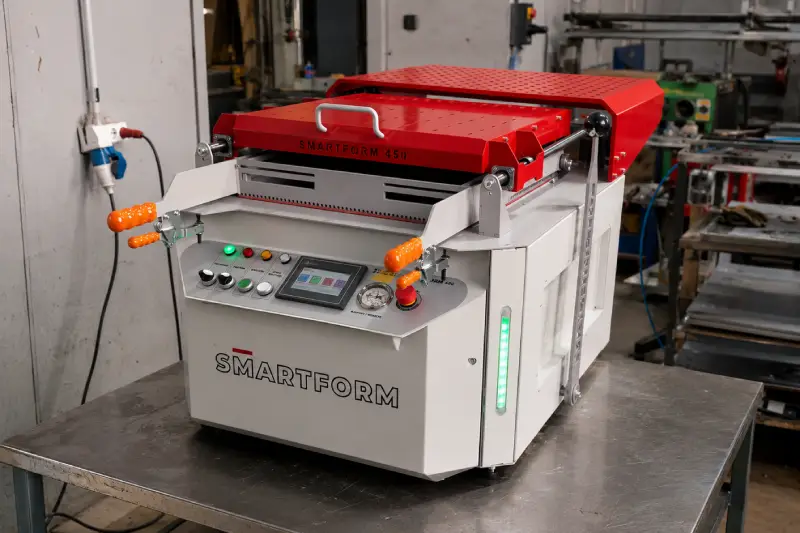
The SMARTFORM 450 is a vacuum forming machine, manufactured and ready to ship, built around a 450 x 450 mm forming bed. That size is not arbitrary: it fits a full-scale cosplay helmet with margin, a standard 1/10 RC body, a guitar pick guard blank, or two smaller parts pulled simultaneously from one sheet. It is the practical minimum for serious hobby work, and it is also a capable entry-level production tool for small professional shops — prototyping studios, packaging startups, and low-volume part runs — that need professional results in a space-limited setup.
SMARTFORM 450 — Specs
What it handles well
The vacuum circuit runs a dedicated rotary vane pump paired with a reservoir tank. This combination matters: when the table lifts and vacuum engages, the tank dumps pressure instantly rather than waiting for the pump to ramp up. That half-second window where the plastic is touching the mold but not yet fully formed is where detail is won or lost. With a tank-backed system, the pull happens fast enough to lock texture before the sheet cools.
Heating is handled by quartz infrared elements split into independent zones controlled by PID regulators. In practice this means the edge zones of the sheet, which cool faster because the clamp frame conducts heat away, get more power than the center. The result is a sheet that reaches forming temperature uniformly across its full area, not a sheet with a hot center and cold corners that produces webbing and incomplete pulls at the edges.
For hobby use in a small space, or for a small professional workshop running short batches, the SMARTFORM 450 covers about 90% of what you will ever want to form. The 6 mm maximum thickness means it handles structural ABS for load-bearing prop parts, thick HDPE for outdoor pieces, and any standard hobby or light-production material without restriction. If your parts fit in 450 x 450 mm, this is the machine for you.
LITE 686: Mid-Format Machine for Larger Hobby and Professional Projects
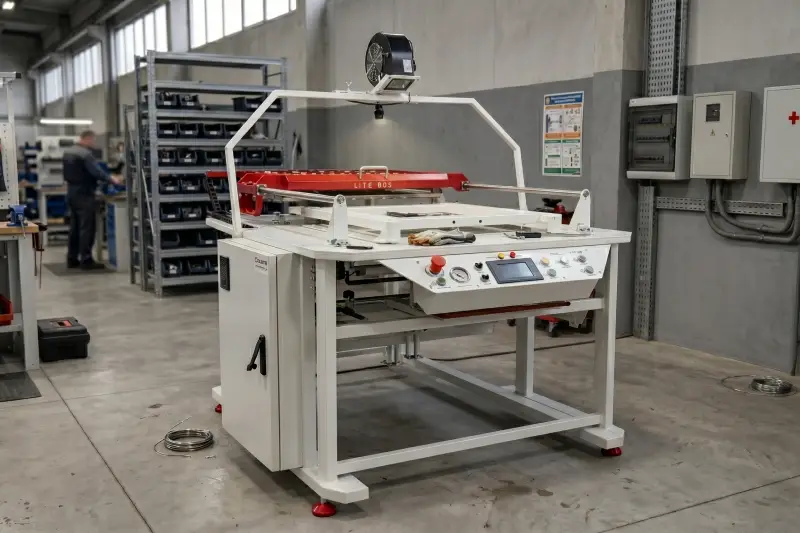
The LITE 686 steps up the forming area to 646 × 620 mm with a 300 mm depth of draw — it is a floor-standing unit, not a bench-top machine. That extra area opens up parts that the SMARTFORM 450 simply cannot fit: full chest armor plates, large shield blanks, long automotive trim pieces, and any part where you need to pull two or three smaller pieces simultaneously from one sheet to save material. For professional users running small production batches, the larger bed and higher heater output also mean better throughput per cycle.
LITE 686 — Specs
What it handles well
The LITE 686 uses quartz infrared heaters rated at 450 W per element — the same heating technology as the SMARTFORM 450 but with higher per-element power to cover the larger forming area. This ensures uniform temperature distribution across the full 646 mm bed width. For hobby and professional work alike, where most pulls are in 2 to 3 mm ABS or HIPS, this system delivers consistent, repeatable results.
Despite the larger forming area, the LITE 686 heats faster than the SMARTFORM 450. At 17 kW across a 646 × 620 mm bed the power density is higher than the SMARTFORM 450's 5 kW over 450 × 450 mm. In practice this means 3 mm ABS reaches forming temperature in 40 to 70 seconds on the LITE 686, compared to 60 to 100 seconds on the SMARTFORM 450. For high-volume batch work — whether an ambitious hobby project or a small professional production run — this is a meaningful advantage.
SMARTFORM 450 vs LITE 686: Which One Fits Your Setup
Both machines produce professional-quality results with ABS, HIPS, PETG, and PP, and both are equally suited to a serious hobby workshop or a small professional production line. Note that the SMARTFORM 450 runs on standard single-phase 230 V, while the LITE 686 requires three-phase 400 V — a critical factor when planning a workshop setup. The decision comes down to the largest part you need to form, available power supply, and bench or floor space.
| Feature | SMARTFORM 450 | LITE 686 |
|---|---|---|
| Forming bed / area | 450 × 450 mm | 646 × 620 mm |
| Max sheet thickness | 6 mm | 6 mm |
| Vacuum depth | 28–29 inHg | 26–27 inHg |
| Heater type | Infrared quartz, 250 W | Infrared quartz, 450 W |
| Table lift | Manual | Pneumatic |
| Best thickness range | 0.5–6 mm | 0.5–6 mm |
| Heating cycle (3 mm ABS) | 60–100 sec | 40–70 sec |
| Power supply | 230 V single phase / 5 kW | 3~ 400 V / 50 Hz / 17 kW |
| Footprint | Bench-top | Bench / floor unit |
| Best for | Helmets, armor, RC bodies, prototypes up to 450 mm | Chest plates, large shields, multi-part sheets, parts up to 640 mm |
How to decide in 30 seconds
Pick SMARTFORM 450 ifYour largest planned part fits in 420 mm in any direction. You want the fastest heating cycle and the deepest vacuum. You have a standard single-phase 230 V supply. You are working on a tight budget and want the smaller initial build.
Pick LITE 686 ifYou need to form parts longer than 450 mm — full chest plates, large automotive trim, oversized prop bodies. You want to pull two or three smaller pieces from one sheet in a single cycle to reduce material waste. You have access to three-phase 400 V / 50 Hz power and the floor space for a floor-standing unit.
If you are just starting out and not sure how large your parts will get, the SMARTFORM 450 is the lower-risk entry, whether you are a hobbyist or a small business testing a product line. A 450 x 450 mm bed handles the majority of hobby and light-professional applications. If you hit its limit, you know exactly why and can step up to the LITE 686 with a clear reason. Both machines are fully described on the vacuum forming machines page.
Best Plastic Sheets for Hobby and Professional Vacuum Forming
Material choice drives as much of the final result as machine selection. The same machine producing a poor pull from incorrectly prepared ABS will produce a clean pull from properly dried and heated material. Here are the four materials run most often in hobby and small professional applications, and the numbers to use for each.
ABS — The Default for Structural Parts
ABS (acrylonitrile-butadiene-styrene) is the first choice for any part that needs to survive impact, bending, or repeated handling — in a hobby project or a production run. It sands, drills, and primes cleanly. It bonds with solvent cement (MEK or acetone) to create joints that are as strong as the base material. It comes in a wide range of colors and surface finishes, including haircell texture that reads as industrial or mechanical without any post-processing.
ABS absorbs moisture. Sheet sitting in an open environment for more than a few days, especially in summer or in a humid workshop, picks up enough water to cause blistering when heated. The fix: dry at 80°C for 2 hours before forming. Add 1 hour per millimeter of thickness above 3 mm. Do this as a habit before every session and you will never see blisters.
HIPS — Easiest to Form, Best for Beginners
HIPS (high-impact polystyrene) forms at lower temperatures than ABS and is more forgiving if temperature control is not perfectly dialed in yet. The forming window is 140–165°C. It reproduces mold texture better than any other material commonly used at this scale. The trade-off is brittleness at cut edges — on parts that will take direct impact, ABS is a better call. For display models, architectural pieces, and props that will be handled carefully, HIPS is cheaper per sheet and easier to get consistent results from on the first few pulls.
PETG — Clear Parts and Visors
PETG is the practical answer to needing a clear visor that does not shatter when drilled. Forming temperature is 120–155°C, the lowest of the four materials here, which makes it easy on the machine heaters. PETG stored in a humid environment for more than a few weeks will develop micro-bubbles during forming — a 2-hour drying cycle at 65°C clears it reliably. For material stored in sealed packaging, skip the drying.
Material Quick-Reference Table
| Material | Forming Temp | Pre-dry | Impact resistance | Best Use |
|---|---|---|---|---|
| ABS | 150–180°C | 80°C / 2–4 hrs | High | Armor, helmets, structural props |
| HIPS | 140–165°C | Not required | Moderate | Display models, shells, prototypes |
| PETG | 120–155°C | 65°C / 2 hrs if humid storage | Good | Visors, clear covers, lenses |
| PP | 155–175°C | Not required | Good (flexible) | Living hinges, flexible panels, outdoor parts |
For a deeper look at material properties including PC, HDPE, and PMMA, the thermoforming plastics guide covers eight materials with full forming parameters and shrinkage data.
Mold Making for Hobby and Professional Use: What Works and What Breaks
The mold determines whether you can get the part off after forming. A technically perfect pull from a well-heated sheet on a properly running machine will still fail if the mold has no draft angles, no vent holes, or is made from a material that cannot handle the forming temperature repeatedly.
3D Printed Molds
This is where most hobby makers and many small professional shops start, and it is a completely valid approach — with the right settings. The common mistake is printing at 15% infill with two walls and wondering why the mold collapses under vacuum load. The plastic sheet is pulled against the mold at roughly 1 kg per square centimeter of atmospheric pressure. For a 150 x 150 mm mold face that is over 200 kg of force.
- Minimum infill: 30% with gyroid or cubic pattern. These distribute load three-dimensionally through the interior.
- Minimum walls: 4 perimeters. Two walls flex under load. Four hold.
- Material: PLA works for PETG and HIPS molds. For ABS at 165°C and above, use ASA or ABS filament for the mold itself, or coat PLA with high-temperature filler primer before forming.
- Surface prep: sand to at least 320 grit and apply two coats of filler primer. FDM layer lines transfer directly to the pull if not removed from the mold surface first.
Draft Angles: Non-Negotiable
Draft is the angle you put on any wall that runs roughly parallel to the pull direction. Without it, the ABS grips the mold as it shrinks during cooling. For positive (male) molds, minimum 3 degrees on any feature shallower than 40 mm; go to 5 degrees on anything deeper. For negative (female) molds, 1 degree is generally sufficient since the part shrinks away from the cavity walls during cooling — 1.5–2 degrees gives comfortable margin.
Vent Holes
Vacuum cannot reach into a blind pocket. Air trapped between the plastic and the mold surface prevents the sheet from making contact, which shows up as rounded detail or a soft area that did not form fully. Drill 0.5–0.8 mm holes at the deepest point of every recess, corner, and pocket. Small enough to leave no visible mark on the part surface, large enough for air to escape during the forming window.
For a full walkthrough of mold geometry, vacuum channel placement, and material choices for repeated production use, the vacuum forming mold design guide covers everything in detail.
MDF and Hardwood Molds
For molds used more than 20–30 times — a common requirement once a hobby project turns into a small production run — wood is more durable than 3D print. MDF machines cleanly on a router and accepts filler primer well. The critical step is sealing: unsealed MDF absorbs moisture from the heated forming environment and swells over time. Two coats of shellac or polyurethane followed by primer and sanding produces a stable mold surface that holds up through hundreds of pulls.
Workshop Space and Electrical Requirements
Both the SMARTFORM 450 and LITE 686 are designed for real-world hobby and small professional environments. Here is what you actually need to set them up.
| Requirement | SMARTFORM 450 | LITE 686 |
|---|---|---|
| Power supply | 230 V single phase / 5 kW | 3~ 400 V / 50 Hz / 17 kW |
| Compressed air | Not required (manual table lift) | 6 bar required (pneumatic table lift) |
| Ventilation | Window or basic exhaust fan | Window or basic exhaust fan |
| Noise level | ~50 dB during vacuum cycle | ~62 dB during vacuum cycle |
| Fume extraction | Only for PVC; standard materials need basic ventilation | Same as SMARTFORM 450 |
Neither machine requires industrial ventilation for ABS, HIPS, PETG, or PP. Opening a window or running a basic exhaust fan is sufficient. The only material that requires real fume extraction is PVC, which releases hydrogen chloride gas when overheated. For all other standard materials, basic workshop ventilation is fine — whether the setup is a home workshop or a small professional shop.
Common Forming Problems and How to Fix Them
These are the defects that come up most often in hobby and small professional setups alike. Almost all of them trace back to temperature, timing, or mold geometry. For a full catalog of 15 defects with root cause analysis, the vacuum forming troubleshooting guide covers all of them.
1. Webbing Between Mold Features
What you seeTriangular fins or folds of plastic bunching between raised areas on the mold, or between multiple molds pulled at once.
Root causeSheet is too hot and has no melt strength to bridge the gap between mold features. At over 180°C ABS becomes fluid enough to fold rather than stretch cleanly.
Fix- Drop heater temperature by 5–8°C and test again before making any other adjustments.
- Space molds further apart — minimum 1.5x the sheet thickness between any two mold edges.
- Add riser blocks around mold bases to pre-stretch the sheet before it contacts the mold peaks.
2. Blistering and Bubbles in the Surface
What you seeRound bubbles or pockmarks on the formed surface. Visible on flat areas, sometimes showing as subsurface voids when backlit.
Root causeMoisture in the sheet converting to steam during heating. Common with ABS stored in open conditions. Also occurs with PETG stored open in humid environments for extended periods.
Fix- ABS: dry at 80°C for 2 hours minimum. Add 1 hour per mm of thickness above 3 mm.
- PETG: dry at 65°C for 2 hours if stored open in humid conditions for more than 2–3 weeks.
- Store plastic sheets in sealed bags with desiccant packets when not in use.
3. Incomplete Pull / Soft Detail
What you seePlastic looks rounded where it should be sharp. Fine texture from the mold does not appear in the pull. Corners are pillowed rather than crisp.
Root causeInsufficient vacuum depth, leaking clamp frame gasket, or missing vent holes in the mold. The sheet is not being pulled tight enough against the mold before it cools.
Fix- Inspect the silicone gasket for any gap or compression damage. Replace if it does not compress evenly around the full perimeter.
- Drill 0.5–0.8 mm vent holes at the deepest point of every pocket and tight corner.
- On cold days (below 15°C), pre-warm the mold to 40–50°C before forming — a cold mold chills the sheet surface too quickly.
4. Part Sticking to the Mold
What you seeFormed part does not release cleanly after cooling. Trying to remove it tears the surface or deforms the part geometry.
Root causeMissing or insufficient draft angles. The plastic shrinks onto the mold during cooling and grips any wall that runs at 90 degrees to the pull direction.
Fix- Apply paste wax (car wax) or dry PTFE spray to the mold before forming. Reapply every 15–20 cycles.
- Extend cooling time until the mold surface drops below 65°C before attempting release.
- If sticking persists: the mold needs more draft — 3–6° for positive molds, 1–2° for negative molds, more on anything with over 40 mm of depth.
FAQ
What is the best vacuum forming machine for hobby and professional use?
The SMARTFORM 450 from THERMOFORA is the best compact option for hobby vacuum forming and light professional use. It has a 450 x 450 mm forming bed, handles sheets up to 6 mm thick, runs on standard 220 V single-phase power, and delivers 28–29 inHg vacuum depth — enough to pull crisp detail from textured molds in ABS, HIPS, and PETG. For projects requiring a larger bed (over 450 mm in any dimension) or higher production throughput, the LITE 686 with its 646 × 620 mm forming area and 17 kW heater output is the next step up, suited to both ambitious hobby projects and small professional production runs. Note that the LITE 686 requires three-phase 400 V power — plan your workshop supply accordingly.
Can you vacuum form plastic at home without industrial equipment?
Yes, with one important caveat. The SMARTFORM 450 runs on standard single-phase 230 V, fits on a workbench, and is genuinely home-workshop compatible with no special electrical requirements. The LITE 686 requires three-phase 400 V / 50 Hz at 17 kW — it needs industrial power infrastructure and is not suitable for a standard home electrical supply without professional installation. Neither machine requires industrial ventilation for standard materials like ABS, HIPS, and PETG. The only exception is PVC, which releases corrosive gas when overheated and requires proper fume extraction regardless of machine size.
What plastic sheet should I start with for hobby or small-batch professional vacuum forming?
HIPS (high-impact polystyrene) is the easiest material to start with. It has a wide forming window of 140–165°C, does not require pre-drying, and reproduces mold texture extremely well. Once comfortable with the process, switch to ABS for any part that needs impact resistance, sandability, and long-term durability. For clear parts like visors and lenses, PETG is the practical choice: optically clear, tough enough to drill and cut without shattering, and formable at lower temperatures than polycarbonate.
How thick an ABS sheet can a hobby or small professional vacuum forming machine handle?
The SMARTFORM 450 handles ABS up to 6 mm thick. The LITE 686 also handles up to 6 mm. Most hobby and small professional applications use 1.5 to 3 mm ABS: cosplay armor typically at 2 mm, structural prop components at 3 mm. The 6 mm ceiling on the SMARTFORM 450 covers even the thickest hobby and light-production applications without restriction. The key requirement for thick sheet forming is adequate heater output and PID-controlled zone heating to avoid scorching the surface before the core reaches forming temperature.
Why does my vacuum formed part stick to the mold?
The two most common causes are missing draft angles and releasing the part before it has cooled enough. Without draft, ABS shrinks onto the mold during cooling and grips any vertical wall mechanically. On 3D-printed molds this happens most often on walls printed at exactly 90 degrees. Apply a minimum 3–6-degree draft on positive (male) molds and 1–2 degrees on negative (female) molds, extend cooling time until the mold surface drops below 65°C, and apply paste wax or PTFE spray before forming. Reapply every 15 to 20 cycles.
Do I need compressed air to run a hobby vacuum forming machine?
Only for the LITE 686, which uses a pneumatic table lift requiring compressed air at 6 bar — a standard workshop compressor handles this. The SMARTFORM 450 uses a manual table lift and does not require compressed air at all. The vacuum pump in both machines is electrically driven.
THERMOFORA Vacuum Forming Machines
Industrial vacuum forming machines — manufactured and ready to ship
SMARTFORM 450 and LITE 686 are built, tested, and shipped from our facility. SMARTFORM 450: single-phase 230 V. LITE 686: three-phase 400 V / 50 Hz. Running in production across 24 countries.