
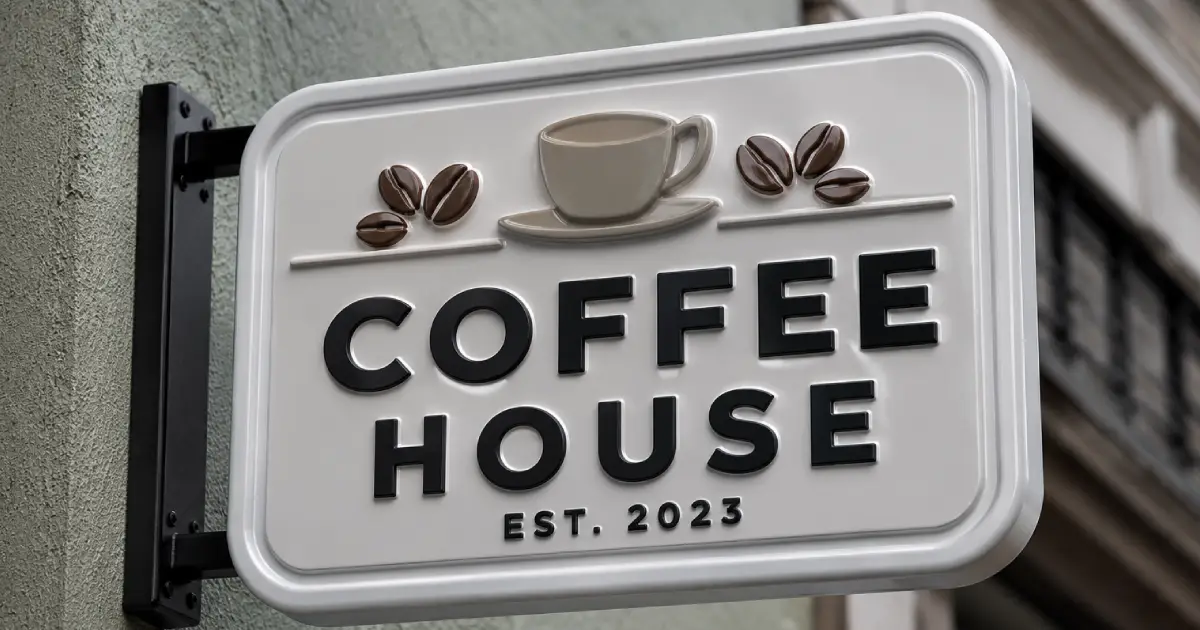
A plastic vacuum forming machine for signage is used to manufacture channel letters, illuminated signs, 3D logos, retail displays, pylon signs, and architectural branding elements. For sign manufacturers and plastic sign manufacturing operations, vacuum forming offers lower tooling costs, faster production cycles, and greater design flexibility than most alternative fabrication methods. Choosing the right signage vacuum forming machine depends on sheet size, material thickness, production volume, and the specific types of signs being produced.
Why Sign Manufacturers Use Vacuum Forming
Sign making has always required a fabrication method that handles complex three-dimensional shapes without driving tooling costs to the point where small and medium runs become unprofitable. That is exactly where thermoforming equipment for signs fits in. For sign shops new to the process, the full breakdown of vacuum forming mold design covers what tooling decisions actually drive part quality and production cost.
Compared to injection molding, a sign making vacuum forming machine requires tooling that costs between 5 and 20 times less. A mold for a channel letter face in aluminum costs a fraction of what the same geometry would require in injection tooling. For a sign shop handling dozens of different client logos each month, that difference is significant.
From production experience, vacuum forming also compresses lead times. Once a mold is cut on a CNC router, a sign shop can be pulling finished parts the same day. Injection molding typically needs weeks of tooling preparation before the first shot. For retail rollouts and franchise branding projects with tight schedules, sign making vacuum forming machines give fabricators a real competitive edge.
The third reason is design flexibility. Sign components range from shallow lightbox faces to deep channel letters with 80 to 120 mm draws. Industrial vacuum forming equipment for signage production handles this entire range without changing the fundamental process.
| Fabrication Method | Tooling Cost | Lead Time | Best For | Sign Types Possible |
|---|---|---|---|---|
| Vacuum Forming | Low to Medium | Days | Channel letters, 3D logos, lightboxes, custom shapes | Channel letters, pylon faces, illuminated signs, architectural elements |
| Injection Molding | Very High | Weeks to Months | Identical small parts in very high volume | Small badge signs, identical housings — not suited for large or custom formats |
| CNC Routing (flat) | No tooling | Hours | Flat 2D letters only, no depth | Flat cut letters only — no 3D depth or formed faces |
| Manual Bending / Handcraft | None | Slow, labor-heavy | One-off custom work | Simple shapes — no complex curves or deep draws |
What Signs Can Be Made With a Plastic Vacuum Forming Machine?

A signage vacuum forming machine covers a wide range of products. This is one of the most common questions from sign shops evaluating their first industrial thermoforming machine for signs — and the answer is broader than most expect. For context on how the process works at the sheet and tooling level before committing to equipment, see how vacuum forming works: process, materials, and tooling.
- Channel letters — formed acrylic faces and returns for illuminated letter sets, the most common application for vacuum forming equipment for signage production.
- Illuminated signs — backlit panels and lightbox faces formed from optically clear acrylic or polycarbonate sheet.
- Pylon signs — large structural sign housings and face panels for freestanding roadside installations.
- Gas station canopies — large-format formed panels and logo housings for canopy fascia systems.
- Retail display signage — three-dimensional product displays, shelf toppers, and point-of-sale structures for retail environments.
- Shopping mall signs — directory panels, wayfinding structures, and tenant identity elements for interior commercial spaces.
- Wayfinding systems — formed housings and face panels for directional and informational signage in airports, hospitals, and campuses.
- Architectural branding elements — three-dimensional brand identifiers integrated into building facades and interior fit-outs.
- Exhibition signs — trade show displays, booth structures, and branded exhibition elements requiring fast production turnaround.
- 3D logos — dimensional brand marks formed from acrylic or ABS for wall mounting, reception areas, and corporate identity installations.
Best Vacuum Forming Machine Size for Sign Production
The forming area is the single most important specification when selecting a plastic vacuum forming machine for signage. Signs are large. A machine sized for prototyping or packaging will not cover the sheet dimensions required for real commercial sign production.
For entry-level sign shops or companies adding vacuum forming as a secondary capability, the SMARTFORM 450 (450×450 mm) and LITE 686 (646×620 mm) handle smaller channel letter sets, individual logo elements, and retail display components. These machines work for regional shops with moderate production volume.
For dedicated sign manufacturing operations, the working area needs to start at 1000×1500 mm or larger. The THERMOFORA line for sign production runs up to the LITE 3020 (3000×2000 mm), which allows full pylon sign panels and large fascia sections to be formed in one shot without seams. For THERMOFORA vacuum forming machines at every production scale, all formats are available with commissioning support and worldwide delivery.
Depth of draw matters equally for sign work. Channel letters with faces that are 80 to 150 mm deep need a table stroke of at least 300 mm, and preferably 400 to 500 mm, to clear the tooling during loading and unloading. Machines with limited Z-stroke become a bottleneck when letter depth increases.
Mold Materials for Sign Production
For channel letter tooling, the mold material is chosen based on production volume and required cycle life. CNC-routed MDF works for prototype runs and short series — expect 50 to 200 cycles before surface wear starts affecting part quality. For medium-volume sign production (500 to 2,000 cycles), a sealed MDF or polyurethane board mold holds up well and costs $300 to $1,500 per set. For franchise rollout programs and high-volume sign fabricators, CNC-machined aluminum tooling delivers consistent results across 10,000 or more cycles at $2,000 to $8,000 per mold set. For a full breakdown of mold types, materials, vent hole sizing, and draft angle rules for vacuum forming tooling, see vacuum forming mold design.
| Production Scale | Recommended Forming Area | Typical Sign Types |
|---|---|---|
| Small shop / secondary capability | SMARTFORM 450 (450×450 mm) / LITE 686 (646×620 mm) | Small channel letters, retail displays, 3D logos |
| Dedicated sign production | LITE 1510 (1460×960 mm) / LITE 2010 (1960×960 mm) | Full letter sets, lightboxes, pylon faces |
| Industrial sign fabricator | LITE 2215 (2160×1460 mm) and above | Gas station canopies, large pylons, architectural panels |
Choosing a Vacuum Former for Channel Letters and 3D Logos

Channel letter production places specific demands on a vacuum forming machine for channel letters that general-purpose thermoforming equipment often cannot meet. The combination of deep draws, tight corner radii, and the need to form multiple letters in a single cycle pushes heating and vacuum systems harder than most other sign types.
Heating System Requirements
Channel letter faces typically range from 2 mm to 5 mm in thickness. Heating this range uniformly across a large bed requires a zoned heating system with independent control over each section of the heater grid. On our machines we use quartz infrared heaters arranged in a matrix controlled by a PLC touchscreen. This lets operators concentrate more heat on the center of the bed where letter depth is greatest, and reduce output at the edges where material is thinner.
For sheets thicker than 4 mm, single-sided heating creates a temperature gradient where the surface overheats while the core stays cold. The practical solution is to extend the heating dwell time and verify core temperature with an infrared pyrometer before closing the table. This ensures the full sheet thickness reaches the forming window without burning the surface.
Vacuum System Performance
The speed at which air is evacuated from under the sheet determines how much detail the formed part captures. For channel letters with tight radius corners and script lettering, the evacuation needs to happen in under 3 seconds from when the table closes. Slower systems let the sheet cool at the corners before it fully contacts the mold, leaving rounded edges instead of sharp definition.
A vacuum surge tank with a capacity of 300 to 600 liters pre-charged before each cycle delivers this speed consistently. The pump keeps the tank at target vacuum between shots, and opening the valve drops pressure instantly when the sheet is at temperature.
Mold Design for Channel Letters
Channel letter molds need minimum draft angles of 3 to 6 degrees on all vertical walls (4–6° working standard) so the formed face releases cleanly without cracking. Corner radii on the mold should never be sharper than the sheet thickness. For a 3 mm acrylic face, the minimum internal corner radius on the mold is 3 mm. Sharper corners cause thinning and stress cracking at the corners of the formed letter.
Vacuum venting holes in the mold should be 0.5 to 0.8 mm in diameter, concentrated at the deepest points of each letter. Larger holes leave visible marks on the formed face when viewed from the front of an illuminated sign.
Plastics Commonly Used in Sign Manufacturing
Material selection affects everything from light transmission and outdoor durability to how easy the sheet is to process on a thermoforming machine for signs. These are the four materials that cover the majority of sign production work.
| Material | Forming Temperature | Key Advantage | Main Limitation |
|---|---|---|---|
| PMMA (Acrylic) | 150 to 180°C | 92% light transmission, 10-year UV stability | Narrow forming window, shatters if underheated |
| PC (Polycarbonate) | 160 to 190°C | Extreme impact strength, vandal-proof | Must be pre-dried before forming |
| PETG | 120 to 160°C | Easy to process, no pre-drying needed | Poor UV resistance, indoor use only |
| ABS | 150 to 170°C | Deep-draw stability, low shrinkage | Opaque, structural use only |
PMMA (Acrylic)
Acrylic is the standard material for illuminated channel letter faces and lightbox panels. It transmits up to 92% of light, holds color under UV exposure for 10 years or more, and is available in hundreds of standard colors. The forming window runs from 150 to 180°C. Below 150°C the sheet is still brittle and will crack under vacuum. Above 180°C the surface begins to bubble and lose optical clarity. The number to watch is the core temperature, not just the surface reading. For thick acrylic sheets (≥4 mm), pre-drying at 80°C for 2 to 4 hours eliminates moisture-related blistering. For LED-backlit sign faces, material thickness directly affects light uniformity. A 2 mm acrylic face placed 30 to 50 mm from the LED strip gives acceptable diffusion for most commercial applications. Thicker sheet (3 to 4 mm) requires more LED-to-face distance to avoid hot-spot banding. Opal-tinted acrylic grades designed for backlit signs give more even light distribution than clear sheet and are worth specifying when uniform glow matters more than maximum brightness.
Polycarbonate
Polycarbonate is used where vandal resistance and impact strength are the priority. Gas station pylons, outdoor kiosks, and transport hub signage often specify PC because it does not shatter under impact. The critical step before forming is pre-drying. Polycarbonate absorbs moisture from the air, and that moisture turns to vapor at forming temperatures, creating bubbles inside the sheet. Pre-baking at 120°C for 1 hour per 1 mm of sheet thickness eliminates this problem.
PETG
PETG is the easiest sign material to process on a vacuum forming machine for signage. It has a wide forming window, no pre-drying requirement, and almost no shrinkage on cooling. For indoor retail displays, exhibition signs, and short-run promotional pieces, it delivers clean results quickly. The limitation is UV resistance. Uncoated PETG yellows and crazes outdoors within one to two seasons.
ABS
ABS does not transmit light, so it is not used for illuminated sign faces. It is used for structural backing panels, letter returns, kiosk housings, and display frames where dimensional stability under heat and strong deep-draw performance matter more than optical properties.
For full forming parameters — temperatures, drying requirements, and shrinkage rates for all sign-relevant materials — see Thermoforming Plastics: ABS, PETG, PP, PC, HDPE, HIPS.
Typical Production Problems and Solutions

Most defects in sign thermoforming come from three sources: incorrect heating, inadequate vacuum speed, or mold design errors. This matrix covers the problems that come up most often on the shop floor when running a signage vacuum forming machine.
1. Webbing Between Letters
What you seeThin plastic fins or folds forming between adjacent letters or tooling elements on the bed.
Root causeExcess overheated material pooling in the gaps between tall tooling structures. Also occurs when letters are spaced too close together relative to their draw depth.
Fix- Increase spacing: gap between letters should be at least 1x the letter depth.
- Reduce center zone heating: lower PLC output on the zones between letters.
- Use pre-stretch: apply a short vacuum pre-draw before the table closes to reduce sag.
2. Surface Blistering
What you seeBubble marks or craters on the formed surface, most common with polycarbonate and thick acrylic.
Root causeMoisture trapped inside the sheet vaporizing during heating. Secondary cause is localized overheating from uneven heater output.
Fix- Pre-dry the sheet: 120°C for 1 hour per 1 mm thickness for PC; 2 to 4 hours at 80°C for thick acrylic.
- Check heater zones: verify output percentages in the PLC and lower any zones running above target.
3. Poor Corner Definition on Channel Letters
What you seeRounded, soft corners on formed letter faces instead of the sharp definition visible on the mold.
Root causeVacuum evacuation too slow, allowing the sheet to cool at sharp corners before fully contacting the mold. Also caused by insufficient vent holes in the mold.
Fix- Check surge tank vacuum level: should reach target pressure before each cycle, not during it.
- Add venting: drill 0.5 to 0.8 mm vent holes at the deepest corner points of the mold.
- Increase table speed: the sheet should contact the mold within 1 to 2 seconds of evacuation starting.
4. Material Whitening at Corners
What you seeWhite stress marks at the corners of formed letters, visible when the sign is backlit.
Root causeSheet drawn before core temperature reached the forming window. Also caused by mold corner radii that are too sharp relative to sheet thickness.
Fix- Increase heating dwell time: add 10 to 20 seconds and verify the sheet sags visibly before closing.
- Update mold geometry: minimum corner radius equals the sheet thickness. For 3 mm sheet, minimum radius is 3 mm.
How Much Does a Plastic Vacuum Forming Machine for Signage Cost
The price of an industrial vacuum forming machine for signage varies significantly based on forming area, heating system type, and automation level. Understanding the cost structure helps sign shop owners make accurate budget decisions and avoid buying underspecified equipment that limits production.
| Machine Category | Forming Area | Price Range (USD) | Best For |
|---|---|---|---|
| Entry-Level Sign Former | SMARTFORM 450 (450×450 mm) / LITE 686 (646×620 mm) | from $5,000 | Small shops, secondary capability, retail displays |
| Mid-Range Industrial | LITE 1510 (1460×960 mm) / LITE 2010 (1960×960 mm) | from $25,000 | Dedicated sign production, channel letters, lightboxes |
| Large-Format Industrial | LITE 2215 (2160×1460 mm) and above | from $65,000 | Pylon signs, canopies, franchise rollouts |
For a full breakdown of machine specifications and pricing across the THERMOFORA range, see how much a vacuum forming machine costs. For production-ready THERMOFORA vacuum forming machines for sign production, all models are available with commissioning support and worldwide delivery.
When calculating total cost, add tooling to the machine price. A CNC-routed MDF mold for a channel letter set costs $50 to $300 depending on complexity. Polyurethane board molds for medium-run production cost $300 to $1,500 per set. CNC aluminum tooling for high-volume franchise sign production runs $2,000 to $8,000 per mold, but lasts for 10,000 or more cycles.
Frequently Asked Questions
What is the best plastic for vacuum forming channel letters?
PMMA (acrylic) is the standard material for illuminated channel letter faces. It transmits up to 92% of light, holds color under UV for 10 or more years, and forms cleanly between 150 and 180°C. Polycarbonate is used when impact resistance is the priority, particularly for outdoor installations in high-traffic or vandal-prone locations.
How thick a sheet can a sign making vacuum forming machine process?
Most industrial vacuum forming machines for signage handle sheet thicknesses from 1 mm up to 6 mm. Sheets above 4 mm require extended heating dwell time and core temperature verification with an infrared pyrometer to ensure the full thickness reaches the forming window without surface overheating. The vacuum system also needs to be sized for the additional material stiffness that comes with thicker sheet.
How deep can channel letters be formed on a vacuum forming machine?
Channel letter depth on a well-configured vacuum forming machine typically ranges from 50 mm to 150 mm depending on sheet thickness and material type. The table Z-stroke needs to exceed the maximum letter depth by a significant margin for the mold to clear the clamp frame during loading. For letters deeper than 100 mm, a machine with 400 mm or more of vertical travel is recommended.
Why does acrylic crack during vacuum forming of sign faces?
Acrylic cracks during vacuum forming when the sheet core temperature is below the forming window of 150 to 180°C. The surface may look ready but the core is still rigid and brittle. Increasing heating dwell time and verifying core temperature with an infrared pyrometer eliminates this problem. Corner cracking specifically is also caused by mold corner radii that are sharper than the sheet thickness.
Which vacuum forming machine size do I need to produce pylon signs?
Pylon sign panels and housings typically require a forming area of at least 1460×960 mm (LITE 1510) to form main face panels without seams. For large roadside pylons, the LITE 3020 (3000×2000 mm) produces monolithic panels in a single shot. Smaller machines require multiple formed sections that are then assembled, which adds labor and introduces potential alignment issues.
What draft angle do I need for channel letter molds?
Channel letter molds need a minimum of 3 degrees draft on all vertical walls, with 4 to 6 degrees as the practical working standard. For textured mold surfaces, add 1 degree for every 0.025 mm of texture depth on top of the base angle. Insufficient draft is the most common reason channel letter faces stick to the mold or deform on release.
Is vacuum forming or CNC routing better for channel letters?
They serve different functions and are typically used together. CNC routing cuts flat letter returns and backer panels from sheet stock. Vacuum forming produces the three-dimensional formed faces that give illuminated channel letters their depth and front profile. A complete channel letter set usually requires both processes: CNC for the structural components and vacuum forming for the formed acrylic faces.
Can I vacuum form signs without a CNC-cut mold?
Yes. For prototype runs and low-volume sign production, molds can be hand-shaped from medium-density urethane board or built up from MDF layers and sanded to shape. CNC-cut tooling becomes the practical choice once production volume exceeds 50 to 100 parts, or where tight dimensional repeatability is required across a franchise sign program.
For more on how the forming process works from heating to demolding, see how vacuum forming works: process, materials, and tooling. For production defects beyond sign-specific issues, the full diagnostic breakdown is in the vacuum forming troubleshooting: 15 most common defects solved. For material selection data across all sign plastics, see thermoforming plastics: ABS, PETG, PP, PC, HDPE, HIPS.
THERMOFORA Vacuum Forming Machines
Industrial vacuum forming machines — manufactured and ready to ship
From compact prototyping formats to full industrial sheet sizes. Every machine is built, tested, and shipped from our facility. Running in production across 24 countries.